The generation that followed was built around Emmanuel Adebayor, African Player of the Year in 2008 and the striker who took Togo to their only World Cup, in 2006. It also lived through the attack that overshadowed Angola 2010. On 8 January 2010, two days before the finals in Angola began, gunmen attacked the team bus in Cabinda. Three people were killed, among them assistant coach Abalo Amelete and press officer Stan Ocloo, and the government called the squad home before a match was played.
Three years later came the breakthrough. At South Africa 2013, Didier Six’s side lost narrowly to Côte d’Ivoire, beat Algeria 2–0 with Adebayor on the scoresheet and held Tunisia 1–1 to reach the quarter-finals for the first time; Burkina Faso needed Jonathan Pitroipa’s extra-time header to get past them. Serge Akakpo, shot twice in Cabinda, started in defence. In 2017, under Claude Le Roy at his record ninth tournament as a coach, Togo held the holders Côte d’Ivoire 0–0 but went out in the group — and have not been back since.
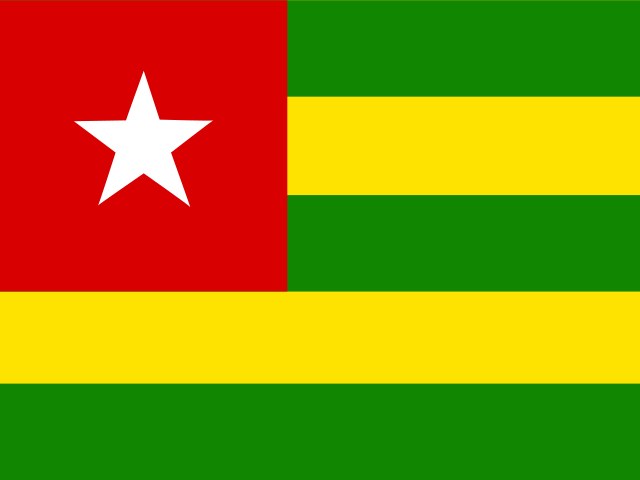
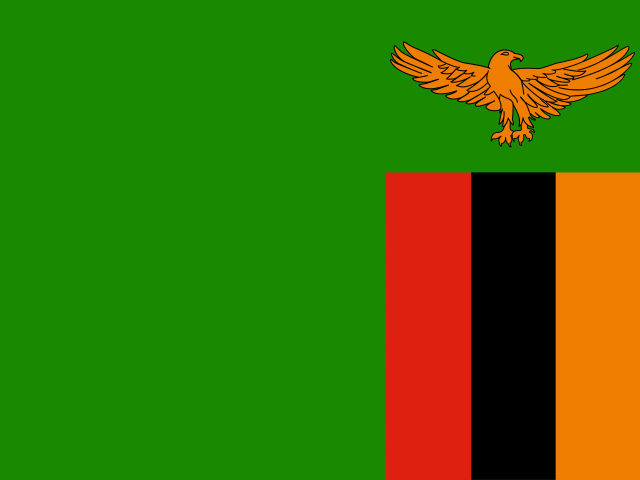
Patrice Neveu, appointed in March 2026, now leads a side he describes as being in a phase of reconstruction. Group I pairs Togo with Algeria, Zambia and Burundi, with the top two qualifying. The campaign opens at home to Burundi at the Kégué Stadium in Lomé on 25 September 2026, before a trip to Ndola to face Zambia four days later.


 Follow Togo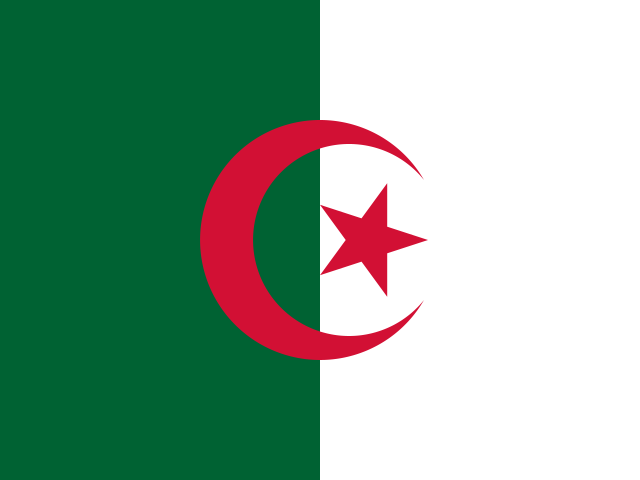


 Fan
Fan

 Nigeria
 Ghana
Ghana Cameroon
 France